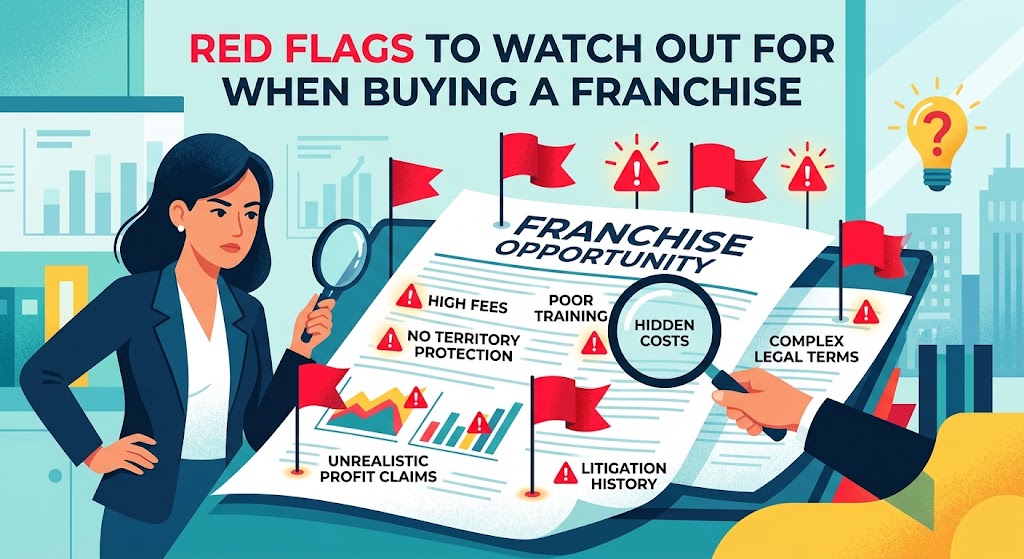
Buying a franchise can be an appealing way to enter the world of business ownership, offering an established brand, a proven business model, and support from a franchisor. However, not every franchise opportunity is as attractive as it first appears. Some may involve hidden costs, unrealistic earnings claims, or inadequate support that can put your investment at risk. Recognising the warning signs before signing a franchise agreement is essential to making an informed decision and choosing an opportunity that suits your financial goals.
Unrealistic Earnings Promises
One of the biggest red flags when buying a franchise is a franchisor that promises guaranteed profits or unusually high returns with little effort. Although some franchise businesses perform exceptionally well, no investment comes with a guarantee of success. Sales figures and profit projections should be supported by reliable evidence rather than vague claims or persuasive sales presentations.
Ask for detailed financial information and investigate the assumptions behind any projected earnings. Consider the impact of rent, staffing, marketing, royalty fees, equipment, and other operating expenses. Be cautious if a franchisor avoids discussing potential losses or pressures you to focus only on the best-performing locations.
Lack of Transparency and Hidden Costs
Another warning sign is a lack of clarity about the total cost of joining and operating the franchise. The initial franchise fee may represent only a portion of the investment, with additional expenses for premises, training, stock, technology, insurance, and ongoing marketing contributions.
For many entrepreneurs, buying a franchise instead of starting from scratch can provide a structured route into business ownership. However, the benefits depend on understanding exactly what the franchise costs and what support is included. Request a complete breakdown of initial and ongoing fees, and make sure you understand how these costs could affect cash flow and profitability.
If the franchisor is reluctant to answer financial questions or repeatedly introduces unexpected charges, take this seriously. A reputable franchisor should be willing to explain its fee structure clearly.
Poor Franchisor Support
A franchise should offer more than permission to use a recognised brand. Training, operational guidance, marketing assistance, and ongoing communication can all play an important role in helping franchisees establish and grow their businesses.
Before committing, ask what training is provided, how long it lasts, and what support is available after opening. Find out whether franchisees receive help with marketing, recruitment, business planning, and day-to-day operational challenges.
If the franchisor provides vague answers or cannot demonstrate a clear support system, consider whether you would be left to manage most challenges independently. Speaking with existing franchisees can help you understand whether the promised support matches their actual experience.
High-Pressure Sales Tactics
Be wary of franchisors that insist you must sign immediately to secure a special price or exclusive territory. While franchise opportunities can be competitive, a legitimate business opportunity should allow sufficient time for research, professional advice, and careful consideration.
Pressure to pay a deposit before reviewing the franchise agreement or financial information is another reason to pause. Take time to investigate the business, compare alternatives, and seek independent legal and financial advice before making a commitment.
Conclusion
Buying a franchise can offer a valuable route to business ownership, but thorough research is essential. Unrealistic earnings promises, hidden fees, poor support, and aggressive sales tactics can all signal potential problems. By asking detailed questions, reviewing the franchise agreement carefully, and speaking with current franchisees, you can better assess whether an opportunity is credible and suitable for your goals. Taking the time to identify red flags before investing can help protect your capital and support a more confident business decision.